
ISO 9001 Certification Canada
ISO 9001 is the world’s leading quality management system (QMS) standard, helping businesses improve processes, ensure consistent quality, and enhance customer satisfaction. With millions of ISO 9001-certified organizations worldwide, it is the benchmark for quality assurance across industries.
Watch our YouTube video to learn more about ISO 9001 certification, implementation, and benefits.

ISO 9001 Certification process
Successfully implementing ISO 9001 requires a structured, step-by-step approach to ensure compliance and long-term effectiveness. A well-planned Quality Management System (QMS) not only meets certification requirements but also enhances operational efficiency and business performance. Below are key highlights of this structured approach:
- Deliver certification training
- Secure senior management commitment and leadership for QMS certification project
- Establish QMS certification project scope i.e. complete certification, on-demand consulting/consultant role, on-demand audit management and fractional consulting on contract.
- Engage leadership and functional groups in process approach and risk based thinking concepts
- Lead senior management in establishing/acknowledging strategic direction
- Determine extent of documented information required by the standard aligned with strategic planning.
- Develop documented information, train employees on QMS and roll it out.
- Evaluate the effectiveness of QMS through internal audit, KPIs and management review.
- Registrar conducts Stage 1 Audit.
- Registrar conducts Stage 2 Audit.
- Identify gaps and develop/implement continual improvement plan.
Benefits of ISO 9001 Quality Management System
Context and Objectives: Implementing a QMS helps organizations assess their overall context, define affected stakeholders, and clarify their expectations. This leads to clear objectives and new business opportunities.
Customer Satisfaction: Prioritizing customer needs and consistently meeting them enhances satisfaction, leading to repeat business, new clients, and growth. Consistent, quality-driven processes result in higher customer satisfaction and loyalty.
Efficiency and Productivity: Aligned and well-understood processes increase efficiency and productivity, reducing internal costs. It optimizes resource allocation, and reduces waste.
Regulatory Compliance: This ensures businesses adhere to laws, regulations, and guidelines relevant to their industry. It helps mitigate risks, avoid legal penalties, and maintain a positive reputation. By staying compliant, organizations can also build trust with stakeholders.
Market Expansion: Certification can open new market opportunities where certification is a prerequisite. It provides a competitive edge and fosters trust with potential clients.
Risk Management: Identifying and controlling potential risks leads to fewer surprises and improved decision-making.
Implementing an ISO 9001 Quality Management System allows organizations to improve operational efficiency, meet customer expectations, and enhance business opportunities. It provides a structured approach to process improvement and helps businesses define clear objectives and quality benchmarks. Here are some key benefits:

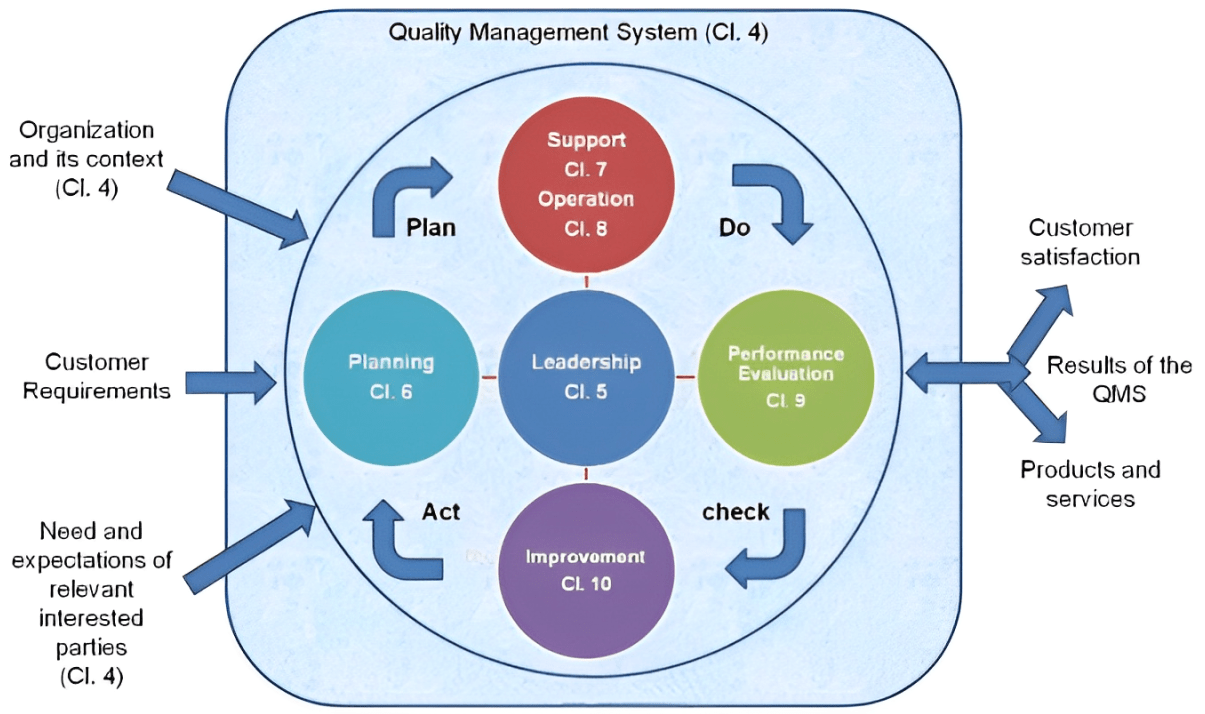
What is the ISO 9001 Standard?
So, what is ISO 9001:2015 Quality Management System? In simpler terms, ISO 9001 helps organizations ensure they consistently provide high-quality products and services that meet customer and regulatory requirements by implementing effective quality management systems.
For example, take a company like XYZ Manufacturing. By using ISO 9001 standards, they may implement strict quality control procedures, regularly audit their production processes, and train employees on quality assurance best practices to reduce defects and improve customer satisfaction.
Developed by experts in quality management, ISO 9001 is an internationally recognized standard that provides a framework for improving an organization’s efficiency, consistency, and ability to meet customer expectations. It is a cornerstone for continuous improvement and operational excellence, ensuring compliance with global quality standards.
Quality Management in ISO 9001
Maintaining product and service quality is a significant concern for any business. Below are some common quality issues that ISO 9001 can help address include:
- Defective products due to inconsistent manufacturing processes.
- Customer complaints due to poor service quality.
- Delays caused by inefficient workflows.
Ensuring Compliance with Quality Standards
- Documentation: Maintaining thorough documentation of quality management processes, procedures, and performance data.
- Audits: Regularly conducting internal and external audits to ensure compliance with ISO 9001 standards and identify areas for improvement.
Improving ISO 9001 Quality Management Performance
- Process Optimization: Continuously improve production and service processes to ensure efficiency and consistency.
- Employee Training: Provide regular training on quality control measures to ensure employees are knowledgeable about maintaining high standards.
- Monitoring and Review: Implement ongoing monitoring of quality metrics and customer feedback.

The Value of ISO 9001 Certification for Your Business
ISO 9001:2015 certification signifies an organization’s dedication to quality management and continuous improvement. By adhering to the Standard, your organization demonstrates a commitment to delivering consistent and high-quality products and services, while meeting customer and regulatory requirements.
The certification process involves an external Registrar who verifies that your organization’s policies, procedures, and documentation align with the ISO 9001 requirements. Achieving ISO 9001 certification fosters a structured and disciplined approach to quality management, ensuring that processes are efficient, effective, and continually improving. This certification enhances customer satisfaction, boosts stakeholder confidence, reduces operational costs, and drives overall organizational excellence. Achieving ISO certification demonstrates your commitment to quality management standards. This certification enhances your business credibility and ensures consistent quality in your products and services.

Real Life Case Studies
- Justice Institute of B.C. – (Post-Secondary Institute) Jack Sekhon and Associates assisted Justice Institute in achieving certification to ISO 9001 QMS Standard.
- Baker Hughes – (Oilfield Servicing) – Jack Sekhon and Associates assisted Baker Hughes in achieving certification to ISO 9001 QMS Standard.
- National Oilwell Varco – (Oilfield Equipment, Technologies, And Expertise) – Jack Sekhon and Associates assisted NOV in achieving certification to ISO 9001 QMS Standard.
- Coast Testing – (Non-Destructive Testing, Inspection & Engineering) – Jack Sekhon and Associates assisted Coast Testing in achieving certification to ISO 9001 QMS Standard.
Training Courses
ISO 9001 Quality Management System Downloadable Toolkits
Frequently Asked Questions
A Quality Management System (QMS) is a set of guidelines that helps a company ensure its products and services meet customer expectations. It includes strategies like setting quality goals and creating policies, and procedures such as specific steps for manufacturing, inspections, and quality checks.
The standard helps by ensuring processes are efficient and effective, reducing waste, and minimizing errors, which collectively reduce the cost of quality.
Implementing an ISO 9001 quality management system can significantly lower quality-related costs from up to 30% to as low as 3% of revenues by improving processes and reducing failures. This system helps prevent defects, optimize resource utilization, improve risk management, and enhance customer satisfaction. By adopting these practices, organizations can achieve cost savings while maintaining high-quality standards. Further exploration is recommended to explore the benefits of ISO 9001.
